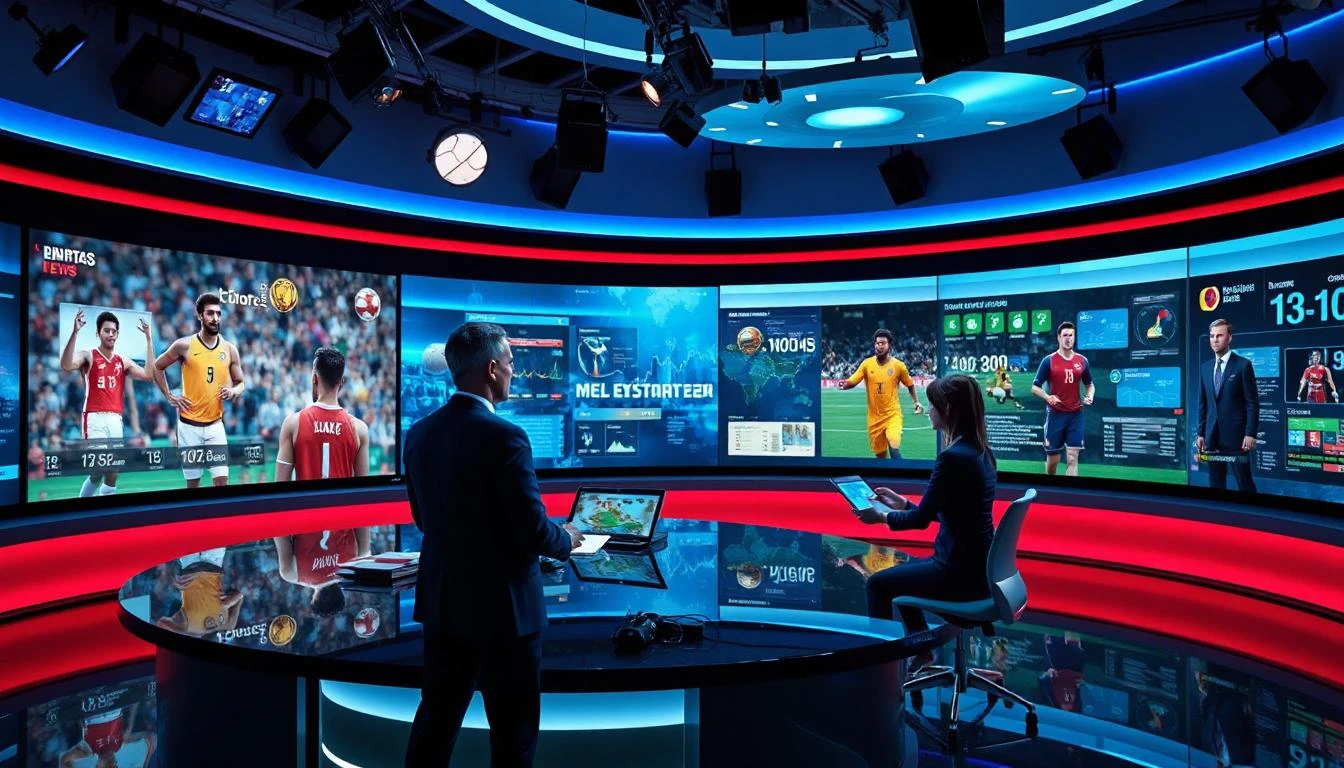
League Coverage Trends 2026

Modern sports media is no longer just about watching a game; it is about experiencing a constantly evolving digital spectacle that blends storytelling, data, and real-time interaction. Fans today expect instant highlights, multi-angle views, and seamless access across devices without friction or delay.
competitive sports broadcasting has transformed into a global ecosystem powered by streaming platforms, AI-driven insights, and audience-first content strategies. What used to be a one-directional broadcast is now a multi-layered digital conversation between leagues, creators, and fans across continents.
Changing Landscape of League Coverage
The sports media world is undergoing a structural shift where traditional broadcast boundaries are dissolving into a fluid, always-on digital network. This evolution is redefining how leagues distribute content and how fans consume it across multiple platforms.
championship event coverage is no longer limited to television networks but expands across streaming services, mobile apps, and social platforms that compete for attention in real time. The rise of multi-platform distribution, live streaming ecosystems, and OTT sports services has created a fragmented yet highly accessible viewing landscape. Fans can now switch between commentary styles, data overlays, and instant replays without leaving the same ecosystem.
At the core of this transformation lies a shift in mindset. Sports analyst Daniel Whitmore once stated, "The modern broadcast is not a transmission; it is an ecosystem of participation." His perspective reflects how leagues now prioritize engagement over exclusivity, ensuring every match becomes a digital event rather than just a scheduled broadcast.
Multi channel broadcasting expansion
Multi-channel broadcasting has become the backbone of modern league coverage. A single match can now generate simultaneous outputs across television, mobile streaming, social clips, and interactive dashboards. This expansion ensures that competitive sports broadcasting reaches audiences in highly personalized formats.
Technologies like real-time content syndication and adaptive bitrate streaming allow fans in different regions to access optimized viewing experiences without buffering or delay. This level of distribution flexibility has fundamentally reshaped how rights holders structure global media deals.
Digital first reporting strategies
Digital-first reporting has replaced traditional post-match journalism with instant analysis and continuous updates. Journalists now operate like live content engineers, producing insights during matches instead of after them.
Platforms leveraging AI-powered sports analytics, live commentary integration, and data visualization tools are enhancing storytelling depth. According to media strategist Laura Kensington, "Speed is no longer a competitive advantage in sports journalism, it is the baseline expectation."
Global audience engagement growth
Global engagement is expanding rapidly as sports transcend geographical and cultural boundaries. A single league match can trend simultaneously across Asia, Europe, and the Americas, driven by synchronized streaming and multilingual commentary systems.
The integration of social media engagement loops and cross-platform fan interaction ensures that conversations around matches continue long after the final whistle, transforming every event into a global digital dialogue.
Fan Focused League Content Experiences
Fan experience is now the central pillar of sports media innovation, where every interaction is designed to deepen emotional connection and sustain long-term engagement across platforms.
Immediately following this shift, championship event coverage has evolved into a participatory model where viewers are not just spectators but active contributors. This transition is supported by interactive streaming tools, fan engagement platforms, and real-time personalization engines that reshape how audiences interact with live matches.
The modern fan journey is no longer linear. It is immersive, fragmented, and highly responsive to individual preferences, creating a dynamic viewing environment that adapts in real time.
Interactive matchday coverage
Interactive matchday coverage allows fans to control their viewing experience by switching camera angles, accessing tactical breakdowns, or joining alternative commentary streams.
This model of competitive sports broadcasting enhances immersion and creates a participatory ecosystem where fans influence how content is consumed. The rise of second-screen experiences and live polling systems has made matchdays more engaging than ever.
Real time league statistics access
Real-time statistics have become essential for modern sports audiences who demand deeper analytical insight. Platforms now deliver advanced performance metrics, player heat maps, and predictive match probabilities during live games.
These innovations transform data-driven sports analysis into a mainstream viewing feature, bridging the gap between casual fans and tactical experts.
Social media driven fan participation
Social media platforms have become parallel broadcast ecosystems where fan reactions shape narrative momentum. Memes, live commentary threads, and instant reactions now influence how matches are perceived globally.
This phenomenon strengthens digital fan communities, ensuring that every moment of a match contributes to a larger cultural conversation that extends beyond the field.
Future Developments in League Reporting
The future of sports media is being shaped by intelligent systems, immersive environments, and hyper-personalized content delivery that redefine how audiences engage with games.
At the center of this transformation is competitive sports broadcasting, now evolving into an AI-enhanced ecosystem where storytelling, prediction, and interaction merge seamlessly. The integration of machine learning models, predictive analytics, and automated highlight generation is accelerating the pace of sports journalism beyond human limitations.
AI engineer Marcus Ellington notes, "We are entering an era where every match generates its own narrative in real time, shaped by both human insight and machine intelligence."
AI powered league analysis
AI-powered systems now generate tactical insights, performance breakdowns, and predictive outcomes within seconds. These systems enhance sports intelligence platforms by offering deeper contextual understanding of gameplay.
The use of computer vision analytics and pattern recognition algorithms allows broadcasters to deliver insights previously available only to professional analysts.
Personalized content recommendations
Personalization engines are reshaping how fans consume content by tailoring highlights, commentary styles, and even narrative framing based on user behavior.
This level of customization strengthens audience retention strategies and ensures that every viewer experiences a unique version of championship event coverage aligned with their interests.
Immersive streaming technologies
Immersive technologies such as VR and AR are redefining presence in sports viewing. Fans can now experience matches as if they were physically inside the stadium, complete with spatial audio and interactive overlays.
These innovations elevate competitive sports broadcasting into a fully experiential medium where physical distance becomes irrelevant.
Explore the Next Generation of League Coverage
The evolution of sports media is converging toward a unified digital ecosystem where content, commerce, and community interact seamlessly. League coverage is no longer just about watching games but about participating in a constantly evolving digital arena shaped by technology and fan behavior.
The most powerful shift in modern sports media is not technological, it is psychological. Audiences no longer want to be informed; they want to be embedded inside the experience itself.
As this transformation accelerates, experts continue to emphasize adaptability. Media consultant Richard Hale summarizes it clearly: "The future of sports broadcasting belongs to those who understand that attention is the new currency."
The trajectory of competitive sports broadcasting continues to redefine global media standards, while championship event coverage expands into immersive, data-rich, and interactive ecosystems that reshape how sports are experienced worldwide.